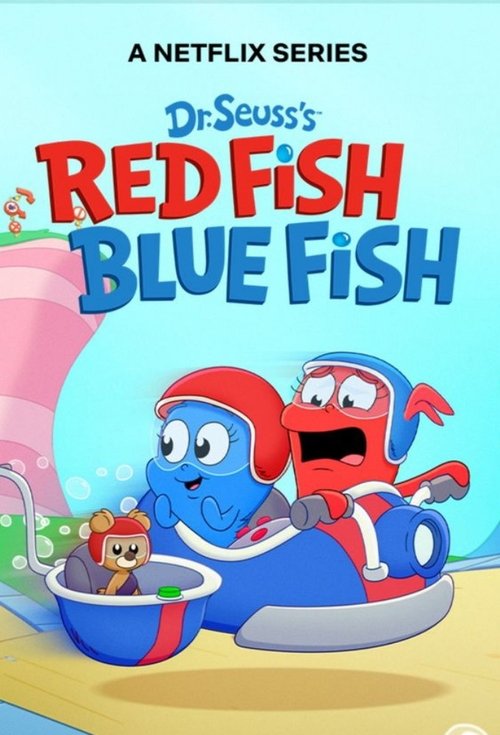
When it comes to Dr. Seuss, many think of classic children's books full of imagination and rhymes. Recently, his masterpiece has been adapted into an animated series titled The Adventures of Red and Blue (Dr. Seuss's Red Fish, Blue Fish), airing in 2025 with 2 seasons totaling 11 episodes. The story follows a duo of two colors as they take kids to explore the world of opposites through a bright and fun perspective. But is this series really that great? Let's find out.
Plot Summary (No Spoilers)
The series revolves around two main characters: Red, a playful red fish, and Blue, a more composed blue fish. They live in a colorful underwater world full of strange creatures. In each episode, Red and Blue encounter situations that teach kids about opposites, such as big-small, tall-short, fast-slow, open-close, etc., with a Narrator with a pleasant voice telling the story in rhymes, a signature style of Dr. Seuss.
The fun of the series lies in its creative presentation of differences through humorous dialogue and lively animation. Kids learn without realizing it, as the content is not forced but woven into entertainment. However, the series does not focus on a long plot; each episode is self-contained, making it easy to watch without needing to remember previous episodes.
Performance and Characters
Although it's animation, voice acting is crucial. Brian Drummond as Red gives an energetic and mischievous voice, while Andrea Libman voices Blue with a soft, composed tone, clearly contrasting. Their interaction makes the characters charming and memorable. Naomi Tan as the Narrator does a great job with a melodious voice that keeps kids engaged.
Other characters, like a cute octopus or a red-shelled crab, add color but have limited roles, so the series focuses mainly on Red and Blue, which might become repetitive for kids who want more character variety.
Direction, Visuals, and Music
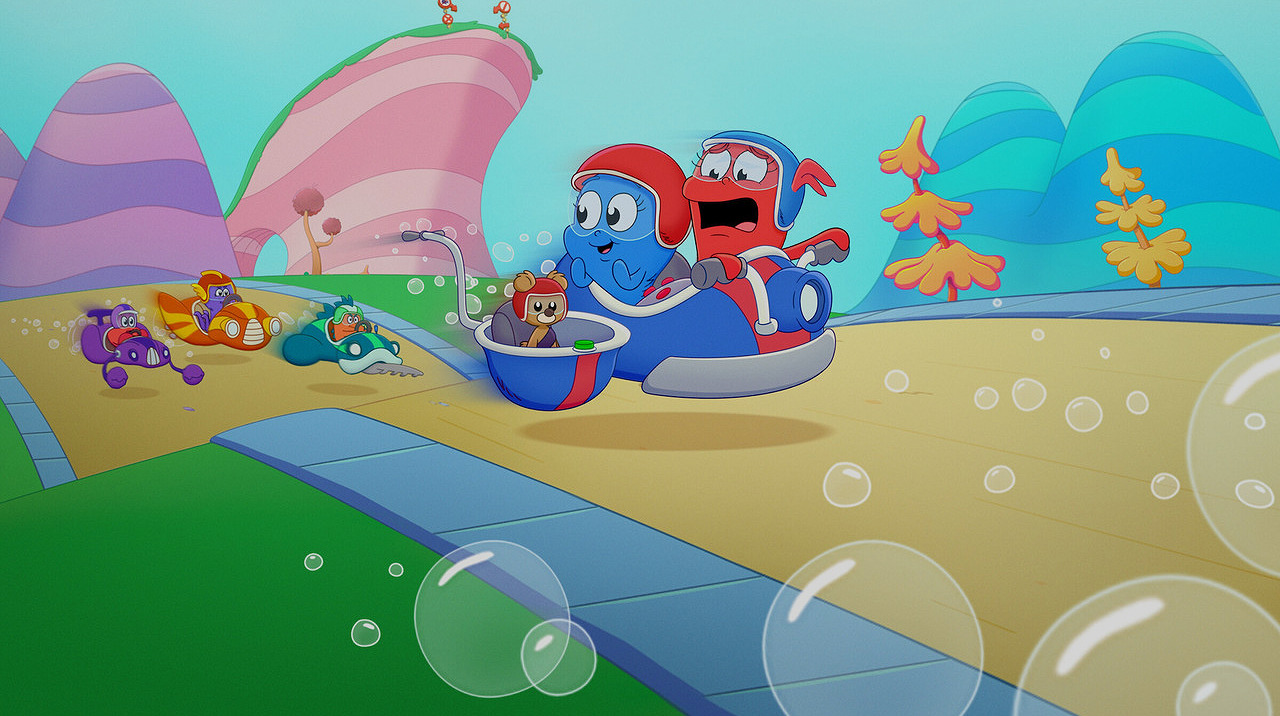
Visually, The Adventures of Red and Blue is bright and colorful, true to Dr. Seuss's style. Characters and scenes are designed to look flat like book illustrations but move smoothly, making kids feel familiar and entertained. The use of red and blue as primary colors clearly emphasizes differences, helping kids understand the concept of opposites easily.
The background music is simple but has a fun rhythm, accompanying the rhyming dialogue. Sound effects and music are not too loud, suitable for young children. However, the series may not stand out in animation technique compared to other kids' shows today, as it sticks too closely to the simple original.
Editorial Analysis
The editorial team views The Adventures of Red and Blue as a series with a clear goal: teaching young children aged 2-5 about differences in a fun and easy-to-understand way. The use of Dr. Seuss-style rhymes helps develop language skills and vocabulary retention. However, the repetitive content in each episode (just changing the opposite) may bore parents.
Additionally, the series lacks deeper social or emotional skill development, such as problem-solving or coexistence. Although Red and Blue are different, they rarely have conflicts or need to adapt to each other, missing the opportunity to teach deeper acceptance of differences. Therefore, this series is more suitable for light entertainment than as a comprehensive developmental tool.
Verdict
This series is suitable for young children just starting to learn about the world, and for parents looking for fun and educational content. Although the content is somewhat repetitive, the bright visuals and good voice acting are enough to entertain kids. It's best to watch one episode at a time, not binge-watch, to avoid boredom.
Screenshots

👍 Pros
- +Teaches opposites in a fun, easy-to-understand way
- +Bright, colorful visuals true to Dr. Seuss style
- +Good voice acting with pleasant rhymes
👎 Cons
- −Repetitive content in each episode
- −Lacks deep social and emotional skill development
- −Episode length too short (about 10 minutes), may not be worth following
Top Cast



FAQ
This series is designed specifically for children aged 2-5, as the content is simple, teaches opposites, and is colorful.
There are 2 seasons totaling 11 episodes, each about 10-12 minutes long.
The series adapts from the book Dr. Seuss's Red Fish, Blue Fish by adding new characters and situations, but retains the rhyming style and teaching of opposites.
There are some songs in certain episodes, but not full musical numbers. Mostly background music and rhyming dialogue.